
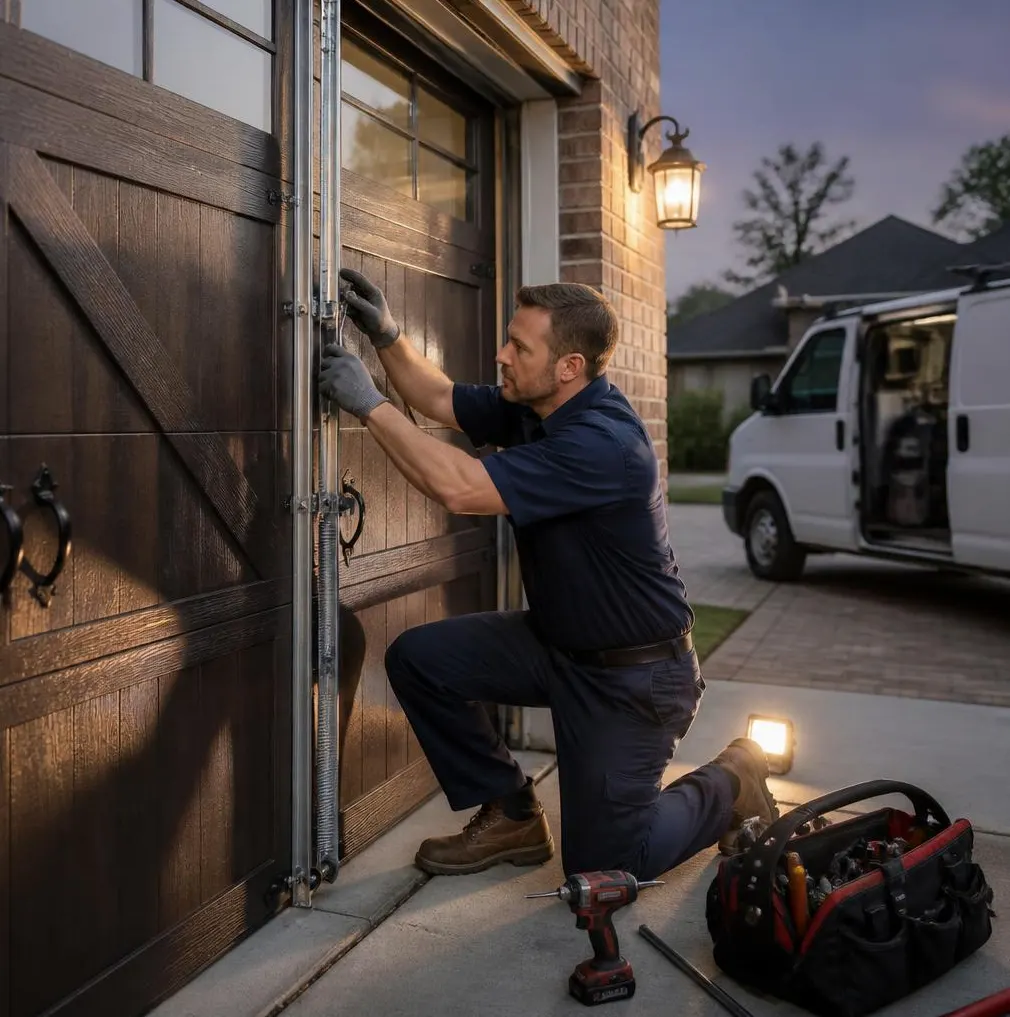
The 10 p.m. Grind That Gets Everyone's Attention
You pull in late, hit the remote, and the door doesn't just open — it announces itself. Metal-on-metal grinding, a rhythmic clank, or a rattle that seems to shake the whole garage. In South Florida, that noise often gets worse after a stretch of afternoon downpours or a few weeks of thick, salty humidity working on exposed hardware. Rollers swell, hinges rust, and bolts that were snug in March start vibrating loose by October. The good news: most garage door opener noise comes from a handful of predictable causes, and several of them are fixable in an afternoon.
Tools You'll Need
- Socket set and adjustable wrench
- Silicone-based garage door lubricant (avoid WD-40 as a long-term lubricant — it attracts grit)
- Clean rags
- Step ladder
- Work gloves and safety glasses
- Flashlight
Step-by-Step: What You Can Check Yourself
- Watch and listen before you touch anything. Run the door up and down once and note where the noise happens — at the top, the bottom, mid-track, or constantly through the whole cycle. This tells you whether you're chasing a hardware problem or a motor problem.
- Tighten every bolt and screw on the track and mounting brackets. Vibration loosens hardware over time, and in coastal-adjacent humidity it happens faster. A quarter-turn on each bolt with a socket wrench often quiets a rattle immediately. Don't over-tighten — snug is enough.
- Lubricate the moving parts. Hinges, rollers, and the track itself should get a light coat of silicone-based lubricant every few months here, more often than the once-a-year schedule recommended in drier climates. Humidity and salt air accelerate corrosion on steel rollers and hinge pins, and dry metal grinding against dry metal is one of the most common noise sources.
- Inspect the rollers. If they're metal and original to the door, swapping them for nylon rollers is a straightforward upgrade that cuts noise significantly — nylon doesn't clang against the track the way steel does. Pull the roller stem from the bracket (support the door first), slide the old roller out, and replace it with a matching size. Do one at a time so the door stays supported.
- Check the weatherstripping at the bottom and sides. Swollen or warped seals from moisture can cause the door to bind slightly as it closes, creating an extra thump. Replacing a worn bottom seal is inexpensive and takes less than 30 minutes.
- Add anti-vibration pads between the opener motor and the ceiling bracket. A lot of what you hear isn't the door — it's the motor's vibration transferring into the ceiling joists and amplifying through the garage. Rubber isolation pads, sold at most hardware stores, cut that transfer noticeably.
- Check the chain or belt tension. A chain-drive opener with too much slack will slap against the rail. Most openers have a tensioning bolt near the motor head — consult your model's manual before adjusting, since over-tightening strains the motor.
Where the Line Is: DIY vs. Calling a Technician
Everything above is reasonable for a homeowner comfortable with basic tools and a step ladder. But some noises point to problems that aren't safe or practical to fix yourself:
- Grinding from inside the motor housing usually means worn gears or a failing bearing — this requires opening the unit, which should be left to a technician.
- A loud bang followed by the door refusing to move is a classic sign of a broken spring, and springs are under extreme tension. Never attempt this repair yourself.
- Persistent noise after you've tried lubrication, tightening, and roller replacement often means the opener itself is reaching the end of its life, or the door is slightly out of balance — both diagnostic jobs for a professional.
- Switching from a chain-drive to a belt-drive opener for a quieter house (common for homes with bedrooms near or above the garage) involves rewiring, remounting the rail, and reprogramming safety sensors — not a weekend project.
When to Call Coral Springs Garage Door
If you've tightened hardware, lubricated the track, and swapped rollers and the door still sounds rough — or if the noise is coming from inside the motor — it's time to bring in a technician. Our team handles Garage Door Opener Repair & Installation and full Garage Door Maintenance visits, which include checking spring tension, track alignment, and overall door balance — three things that cause noise but aren't obvious from the garage floor. If you're ready to go quiet for good, we also install belt-drive openers built to handle South Florida's heat and humidity without the chain rattle.
If your garage door opener in Coral Springs, FL is keeping the house up at night, give Coral Springs Garage Door a call — we'll track down the real cause and get it running quietly again.