
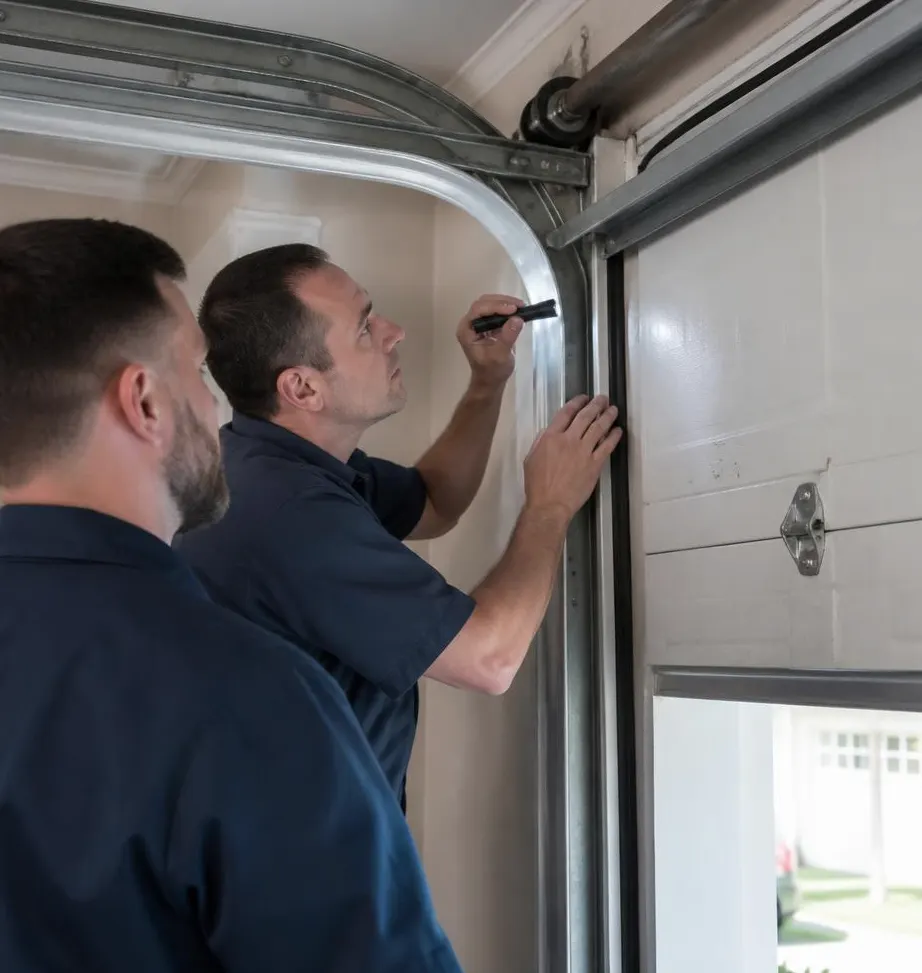
Why This Can't Wait Until Next Season
Skip the garage door during a home purchase and you're not just risking a repair bill later — you're risking it during hurricane season, with a door that may not meet wind-load requirements, springs that could fail while you're trying to secure the house before a storm, or an opener with no battery backup when the power drops and you need to get a car out. A spring replacement or opener swap done calmly in November is a lot cheaper and safer than an emergency call during a tropical storm watch. Closing on a house doesn't reset the age or condition of the garage door — it just transfers the problem to you. Walk through this checklist before you sign anything, or within the first week of moving in if the deal's already done.
The Walkthrough: What to Check and What It Means If It Fails
1. The Wind-Load Label
Look for a sticker or stamp on the inside of the door panel listing a wind-load rating or compliance with impact standards. Homes in this part of Florida need doors built for high wind pressure, and a door without this rating — or one that's clearly been swapped for a cheaper non-rated model — is a liability during hurricane season. If you can't find the label, ask the seller or installer for documentation. No label and no paperwork means you should assume the door isn't rated and budget for a replacement.
2. Spring Condition and Balance
Disconnect the opener (pull the red release cord) and lift the door manually about halfway. It should stay in place on its own. If it slams down or shoots up, the springs are out of balance or worn out. Also look at the springs themselves: surface rust, flaking, or visible gaps between coils under tension are signs of a spring near the end of its life. Humidity speeds up spring corrosion here, so a spring that looks fine on a drier house might be more worn than it appears after years in a South Florida garage.
3. Rollers and Tracks
Open and close the door while watching the rollers travel through the tracks. They should move smoothly without grinding, wobbling, or jumping the track. Rusted rollers or tracks with pitting are common near the coast where salt air accelerates corrosion, even a few miles inland. Bent tracks usually mean the door was hit at some point — by a car, a storm-blown object, or settling of the track bracket itself — and can cause premature wear on rollers and the opener motor.
4. Weatherstripping and Bottom Seal
Check the rubber seal along the bottom of the door and the stripping around the sides. Cracked, flattened, or missing weatherstripping lets water in during afternoon downpours, which leads to swelling in wood-composite doors and rust at the bottom edge of steel doors. If the seal is compressed or torn, water intrusion has probably already happened — look for warping or a wavy bottom panel as confirmation.
5. Panel Condition, Especially Near the Bottom
Run your hand along the lower panels and check for soft spots, bubbling paint, or rust blooms. The bottom two feet of a garage door take the most moisture exposure from splashback during storms and standing water after heavy rain. Surface rust is cosmetic; rust that's eaten through the metal or caused the panel to flex is structural and affects the door's wind resistance.
6. Hardware: Hinges, Bolts, and Brackets
Loose or rusted hinges and bolts reduce the door's ability to hold together under wind pressure, which matters a lot during storm season. Give the hardware a visual check and a gentle tug — anything that wiggles more than it should needs tightening or replacing before it becomes a bigger failure point.
7. Opener Age, Safety Reversal, and Battery Backup
Test the auto-reverse safety feature by placing a block of wood in the door's path while closing — it should stop and reverse immediately. If it doesn't, that's a safety issue that needs fixing right away. Also check whether the opener has battery backup. In a region where power outages during storms are common, a battery backup opener means you're not stuck manually cranking the door open in bad weather.
What Inspectors Often Miss
General home inspectors typically check that the door opens and closes and look for obvious damage, but they rarely test spring balance, verify wind-load labels, or dig into rust under weatherstripping. Those are exactly the issues that turn into expensive surprises once hurricane season rolls around.
When to Call Coral Springs Garage Door
If your walkthrough turns up worn springs, a door without a wind-load rating, or rust that's gone past cosmetic, it's worth getting a second opinion before you're relying on that door in a storm. We handle spring replacement with hardware rated for local wind conditions, and our garage door maintenance service covers a full inspection of tracks, rollers, seals, and opener safety features — the same items on this list, checked by someone who works on these doors every day.
If you're buying, renovating, or just moved into a home in Coral Springs, Parkland, Coconut Creek, or anywhere nearby and want a garage door checked out properly, give Coral Springs Garage Door a call. We'll tell you straight whether it needs a fix, a replacement, or just some routine maintenance.